
Keep a serviceable tank
Reuse your suitable existing electric geyser rather than replace a working tank simply to introduce solar heating.
Solar PV water heating · Gauteng
Keep Your Existing Geyser — Convert It to Solar With Panels
Put the sunshine on your roof to work heating your water. Ndlovu Electrical Services converts suitable existing electric geysers to solar PV water heating using dedicated solar panels and compatible Geyserwise equipment. Keep your existing tank, reduce your reliance on grid electricity for water heating, and retain an electricity backup option when required.
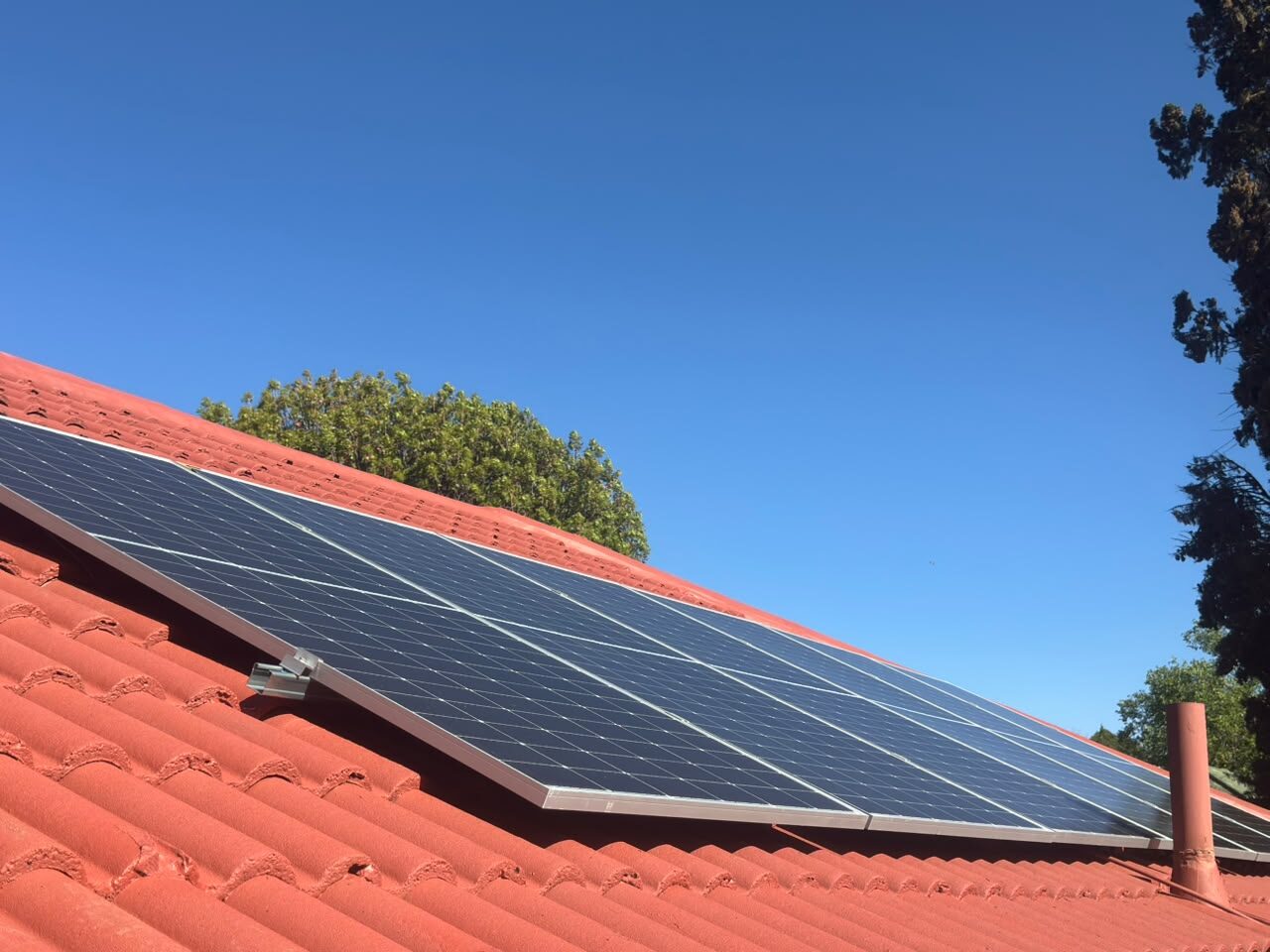
Rooftop PV panels from our household solar portfolio, shown for reference—not a completed Geyserwise conversion.
Sunlight to stored hot water
Photovoltaic (PV) panels produce DC electricity from sunlight. A compatible maximum power point tracking (MPPT) controller adjusts how the available solar output is used for heating as sunlight changes. A compatible PTC AC/DC element replaces the existing element, heating water inside your retained geyser.
Dedicated solar PV panels
Sunlight → DC electricity
Compatible MPPT
Manages available solar output
AC/DC heating element
Inside your existing geyser
Heats water stored in the retained tank
Separate temperature control
Monitors water temperature and manages heating; some models need mains power.
Separate AC backup supply
Supplementary heating through the compatible AC arrangement.
The panels feed compatible geyser-heating equipment, rather than running a conventional geyser through a household inverter. A household inverter or battery is not required in the dedicated heating path, and this conversion does not power the rest of your home.
Temperature controls manage heating, while a compatible mains-electricity connection can top up hot water when needed. The TSE1 and TSE1 with optional Tuya Wi-Fi use 230V AC power. Whether solar heating continues during a power outage depends on how your selected controls are powered; we explain this when choosing your system.
Solar panels & geyser controls
From our household solar portfolio—not a completed Geyserwise conversion.
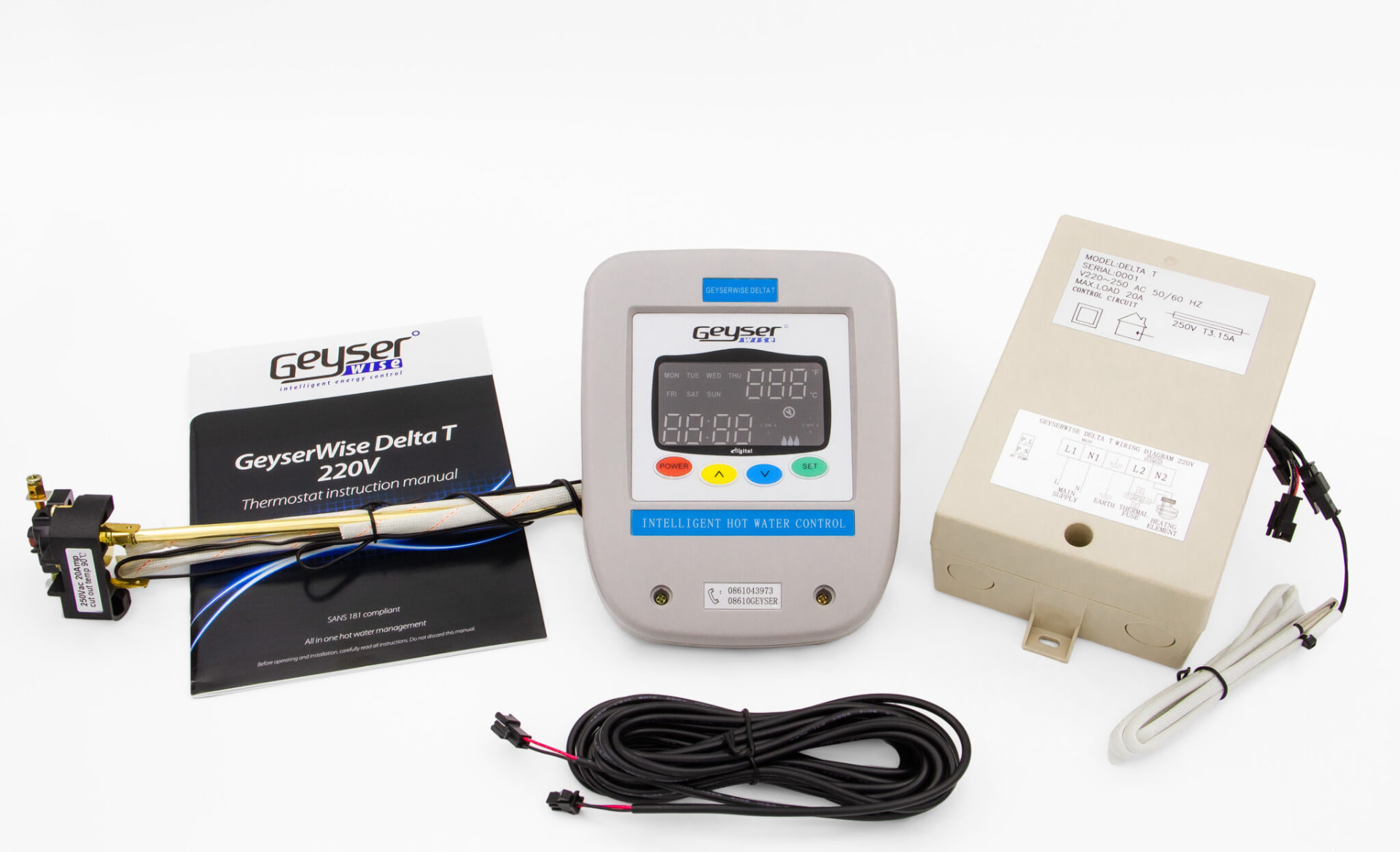
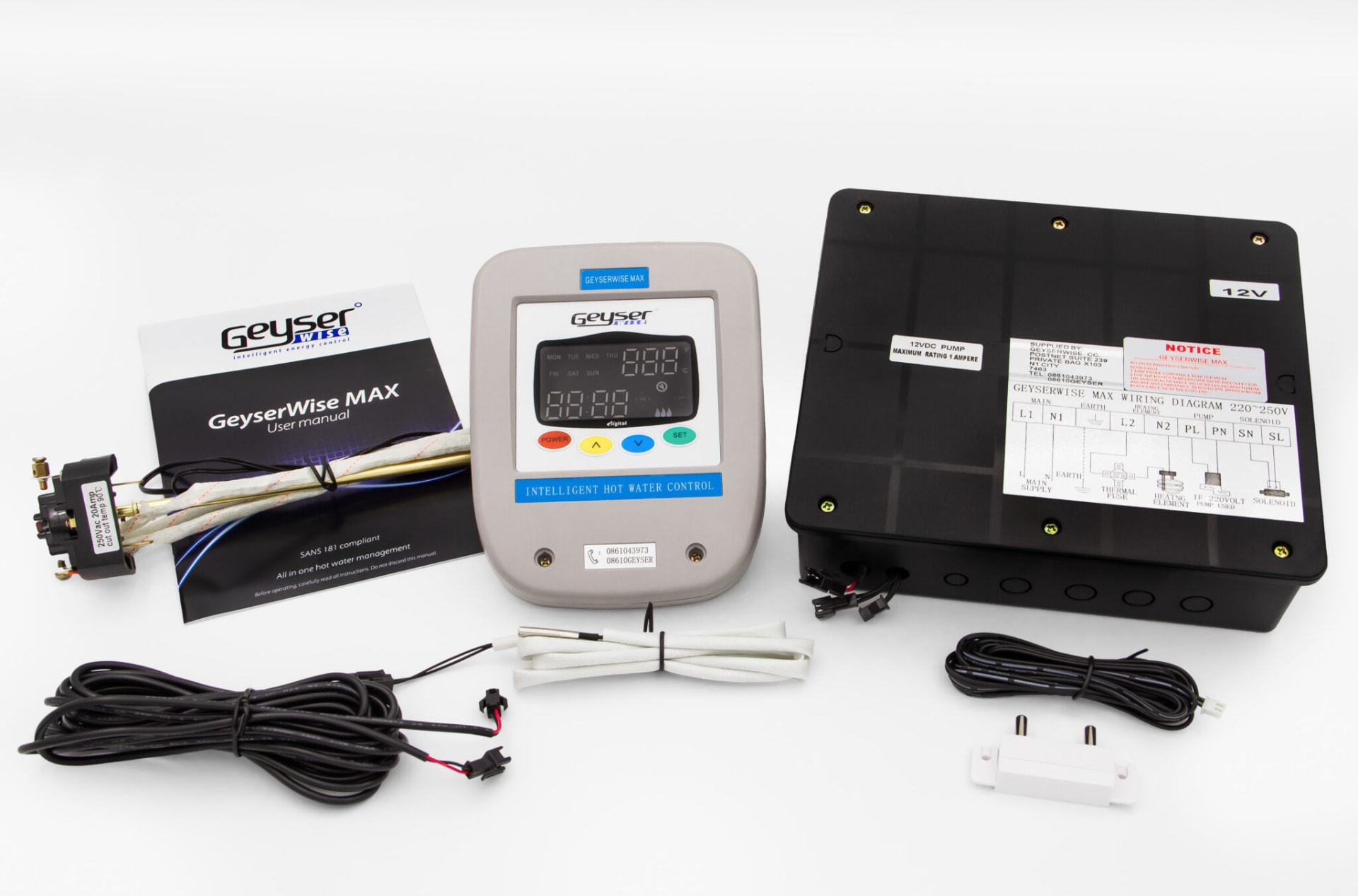
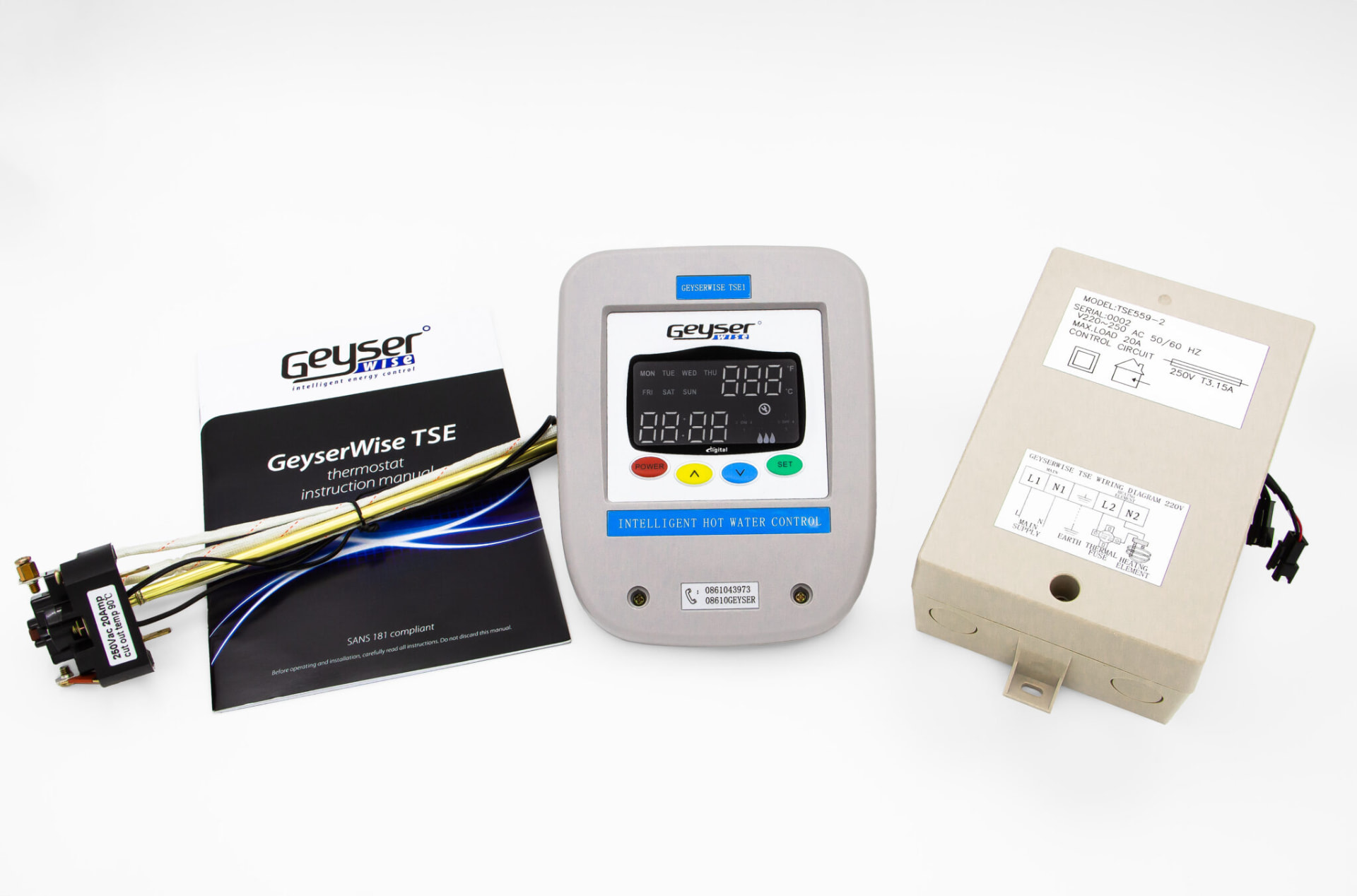
Controller photos show equipment, not complete solar conversion kits. Solar PV heating also needs compatible panels, MPPT and an AC/DC heating element; your quotation confirms the selected components.
These are assessed installation configurations, not fixed manufacturer packages. Tank size alone does not determine panel count or wattage. A suitable roof, compatible components and your household’s hot-water needs guide the selection.
| Option | What we assess or confirm |
|---|---|
| Existing 100L geyser | A conversion matched to a suitable 100L tank. Tank condition, compatible components, hot-water demand and solar conditions determine the design. |
| Existing 150L geyser | A 150L geyser solar conversion selected around your household’s usage, the existing tank and available roof conditions. |
| Existing 200L geyser | A 200L geyser solar conversion with array sizing and supplementary heating assessed for your hot-water requirements. |
| Standard local control | Compatible temperature display and programmable heating controls. Features and control-power requirements are confirmed for the selected equipment. |
| Optional Wi-Fi control | A compatible Geyserwise controller and Tuya module, Wi-Fi network and internet access enable remote temperature viewing, temperature changes and switching. This is an optional control upgrade, not a different heating method. |
We size your solar panels to suit your geyser, roof conditions and hot-water needs. The panels must work within the selected MPPT and heating element’s voltage and current limits.
Geyserwise’s component range includes a 2kW AC / 1100W DC 72V PTC element. The right model depends on your tank and chosen solar equipment; your quotation identifies the compatible element for your installation.
Reuse your suitable existing electric geyser rather than replace a working tank simply to introduce solar heating.
Dedicated PV panels can reduce grid electricity used for hot water. Savings depend on sunlight, shading, usage, sizing, insulation and AC backup settings.
PV panels generate electricity; geyser water does not flow through them. No solar water-circulation pump is required for this dedicated PV approach.
Panels need not sit immediately beside the geyser where a suitable cable route and compatible electrical design allow separation.
Compatible controls monitor temperature and manage heating. Supplementary AC heating can assist when sunlight is insufficient.
Compatible Tuya equipment can add remote temperature viewing, adjustments and switching with suitable Wi-Fi and internet connectivity.
PV panels generate electricity without a water-filled collector circuit. Your geyser and household plumbing still need suitable frost protection and routine care.
Check capacity, condition and compatibility. A leaking, damaged or unsuitable tank may need separate repair or replacement.
Review roof space, orientation, shading, mounting requirements, household hot-water use and cable routes.
Select compatible panels, MPPT, AC/DC element and controls. The written quotation confirms equipment, scope, exclusions and applicable compliance documentation.
Fit the agreed mounting, cabling and required electrical protection, then install and connect the compatible conversion components.
Test the installed arrangement and confirm the operation of heating and temperature controls.
Demonstrate the controls and explain solar operation, supplementary AC heating settings and manufacturer maintenance guidance.
The PV approach normally avoids adding roof-to-geyser water-circulation pipes. Any existing plumbing defects or necessary repairs are assessed separately. Your quotation confirms the equipment, installation scope, exclusions, charges, applicable warranties, compliance documentation and expected schedule.
Yes, a suitable existing electric geyser can be converted after inspection of the tank and checks that the element, controls and solar equipment are compatible. Suitability is assessed for your property rather than assumed.
The intention is to keep your existing tank. A leaking, damaged or unsuitable geyser may need repair or replacement first; that work and its cost must be confirmed separately in your quotation.
Geyserwise lists PV water-heating systems for 100L, 150L and 200L capacities. We assess each tank’s condition, component compatibility, household demand and solar conditions before selecting an installation configuration.
No. This conversion uses photovoltaic panels to generate electricity for a heating element in your existing tank. Solar thermal systems instead use tubes or collectors to transfer heat through water or another fluid. With this PV approach, your suitable existing tank stays in place.
No. A timer or temperature controller alone does not generate solar electricity or convert the heating arrangement. Dedicated compatible solar generation, MPPT and heating equipment are also required for a PV conversion.
Dedicated roof-mounted photovoltaic panels generate DC electricity. A compatible MPPT manages that solar output for a compatible AC/DC PTC heating element inside the existing geyser. Temperature controls manage heating, and a compatible AC arrangement provides supplementary electricity heating.
A conversion typically uses PV panels, a compatible MPPT, an AC/DC PTC heating element, temperature controls, mounting, cabling and electrical protection. Your written quotation sets out the selected models, quantities, installation work, exclusions and applicable compliance documentation.
We size your solar panels to suit your geyser, roof conditions and hot-water needs. Panel voltage, current and output must match the chosen MPPT and heating element. Tank capacity, roof orientation, shading and local sunlight all influence the selection.
Dedicated solar-to-element heating does not require a household inverter or battery in the heating path. Some temperature controllers still need mains electricity: the TSE1 and TSE1 with Tuya use 230V AC. We explain how your selected controls are powered and whether heating can continue during a power outage.
Existing panels cannot simply be shared or connected to a geyser conversion. Their existing connections, voltage and current limits, controller compatibility and protection need an appropriate electrical design. We assess your current installation before advising whether any integration is suitable.
No, not necessarily. Suitable cable routing and a compatible system design can allow panels and the existing geyser to be separated. Cable distance, protection and roof conditions are considered when quoting.
Reduced sunlight can lower solar heating output. Seasonal conditions, shading and household consumption affect performance, so supplementary AC heating may be needed more often on cloudy days or in winter.
Water heated during the day is stored in the insulated geyser. Night-time availability depends on the temperature reached, how much water has been used, heat losses and supplementary heating settings. It is not a guarantee of unlimited hot water.
Yes, with a compatible AC backup arrangement. Supplementary electricity heating is managed according to the selected system design and settings; we explain the agreed arrangement when handing over the installation.
It depends on the equipment and how the controls are powered, as well as available sunlight. Controls that rely on mains electricity need a suitable alternative supply to operate when the grid is off. We confirm what your selected system can do before installation.
Heating time varies with starting water temperature, tank volume, sunlight, panel output, heat losses and water used while heating. Allow time for the stored water to warm up; the same system may heat more slowly in winter or on cloudy days.
Cost depends on equipment selection, tank compatibility, roof access, mounting, cable distance, electrical protection and any remedial work. Send your location and photographs so we can discuss a suitable configuration and prepare a written quotation. Any assessment or travel charge is confirmed with you.
Solar heating can reduce grid electricity used for hot water. Your results depend on sunlight, shading, system size, usage, insulation and backup settings. Any estimate relates to water heating, rather than your entire household electricity bill, and varies from home to home.
An optional compatible Geyserwise controller with a Tuya Wi-Fi module can let you view the temperature, change temperature settings and switch heating through the Tuya Smart app. Compatible hardware, suitable Wi-Fi and internet access are required. This upgrade is not included in every installation and does not replace the PV heating equipment.
Follow the selected equipment manufacturer’s guidance for inspecting panels, mounting, wiring, electrical protection, controls and geyser components. Existing tank or plumbing issues also need attention. The system is not maintenance-free; electrical checks and repairs should be undertaken by a suitably qualified person.
Ndlovu Electrical Services is based in Centurion and serves Pretoria, Midrand, Sandton, Fourways, Johannesburg, Alberton, Benoni, Boksburg and surrounding Gauteng areas. Send your suburb to confirm availability and any travel or assessment charges. Use the phone, WhatsApp and email details shown on this page.
Send us your location and details of your geyser and roof. We’ll discuss a suitable solar PV conversion and confirm the next step, including any assessment or travel charges.
For multiple geysers, add the individual capacities in the details box. If you’re unsure about your tank or roof, choose “Not sure”.
WhatsApp Your PhotosWe assist households in Centurion, Pretoria, Midrand, Sandton, Fourways and surrounding Gauteng areas. Send your suburb so we can confirm availability and any travel or assessment charges.
Explore Geyserwise’s published product information and PV manual. We select compatible models and explain their power requirements for your installation.
Send us your location and photos of your geyser and roof. We’ll assess a suitable Geyserwise solar conversion option for your property.